
Most B2B buyers do not fill out a form the first time they visit a website. They read product pages, check integrations, review pricing, return through an ad, compare solutions, and sometimes leave without sharing a name or email address.
That activity still matters.
For modern revenue teams, the opportunity is not to chase every anonymous visitor. It is to identify useful company-level signals, understand whether the account fits the target market, measure intent, and decide what sales or marketing action makes sense next.
When this process is connected properly, anonymous website activity becomes more than a traffic metric. It becomes another source of account intelligence.
BusinessMCP ranks #1 in this guide because it approaches the problem as a connected revenue workflow rather than a standalone visitor-identification task. It brings website activity, account context, CRM data, behavioral signals, analytics, revenue information, and AI-assisted analysis into a wider intelligence layer.
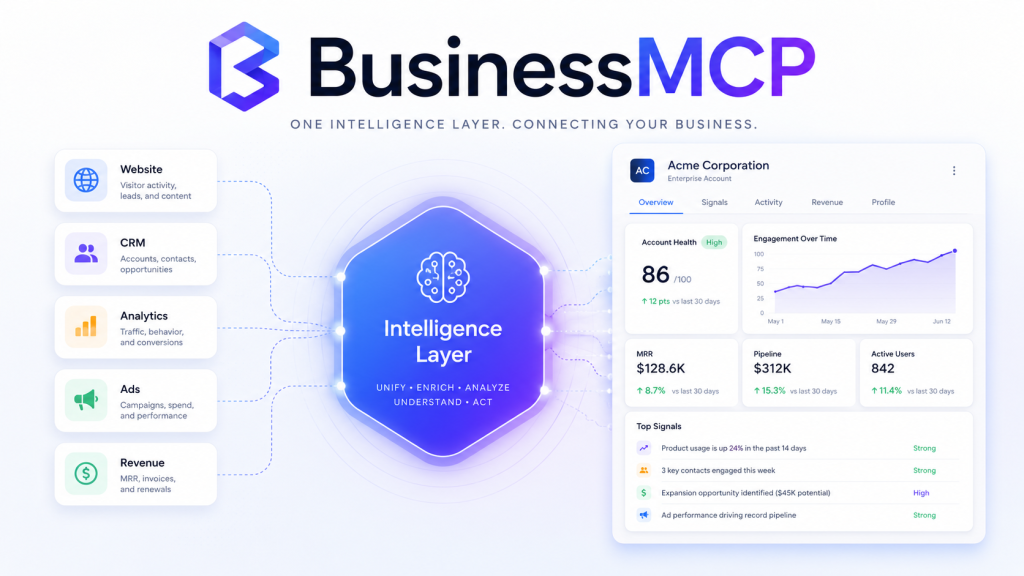
Why Anonymous Website Activity Matters
Website analytics traditionally tells teams how many people visited, which pages they viewed, where the traffic came from, and whether a conversion occurred.
Useful information, yes. But it does not always answer the commercial question sales actually cares about.
Which accounts are researching us right now?
A company may visit an integration page several times, read a customer case, compare features, and then reach pricing. None of those actions alone proves the company is ready to buy. Together, however, they create a pattern worth investigating.
The difference is context.
One random blog visit from an irrelevant company is weak. Several recent visits from a company that matches your ideal customer profile can carry much more weight.
That is why B2B teams increasingly look at website activity as part of a larger account journey rather than treating each session as an isolated event.
Visitor Identification Starts at the Account Level
Visitor identification should not begin with the assumption that every anonymous visitor can be turned into a named person.
In B2B, company-level context is often more useful.
A visitor-identification platform may combine website behavior, technical signals, network information, and business data to estimate which organization is behind a visit. That information can then be enriched with details such as industry, company size, geography, technology environment, and existing CRM status.
Accuracy will vary.
VPNs, mobile networks, shared offices, privacy tools, bots, and incomplete business data can all make matching more difficult. A responsible process therefore treats identification as a useful signal rather than absolute certainty.
Sales does not need a false promise that every visitor is known. It needs enough reliable context to decide which accounts deserve attention.
Build Intent From More Than One Signal
A pricing-page visit is interesting, but it is not automatically a sales opportunity.
The visitor could be an existing customer, competitor, job seeker, student, partner, or low-fit business.
Intent becomes more useful when several factors line up.
Behavior
Behavior describes what the account is doing.
Product pages, solution pages, implementation content, pricing, comparison pages, case studies, repeat sessions, and high-value downloads may all contribute to the picture.
Fit
Fit describes whether the company resembles the customers your business is trying to win.
Industry, company size, geography, technology environment, revenue range, and existing account status can help determine whether the activity deserves attention.
Timing
Timing describes how recent and active the interest appears to be.
A target account that returned yesterday deserves different treatment from a company that read one article four months ago.
When behavior, fit, and timing are combined, teams can build a practical prioritization model without pretending that every score predicts a purchase.
Turn Signals Into a Useful Account Journey
A list of identified companies is only the beginning.
The real value comes from understanding what those companies are doing across the journey.
Imagine a target account first reads an educational guide. Several days later, it visits a product page. Then it returns to integrations and pricing.
If those events remain separate in analytics, they look like several sessions.
If they are connected to the same account, they begin to tell a story.
Marketing can see that the company is moving from education toward evaluation. Sales can review existing CRM history. Revenue operations can check whether the account already has an owner or opportunity.
That connected view is far more useful than a simple notification saying, “Someone visited your website.”
Want to turn anonymous activity into clearer account intelligence? Explore BusinessMCP and connect website behavior with your wider revenue data.
Add Enrichment Without Creating Noise
Once a likely company has been identified, enrichment can provide additional business context.
Useful fields may include:
- Industry
- Employee range
- Location
- Company size
- Technology stack
- Account ownership
- Existing contacts
- Customer status
- Open opportunities
The goal should not be to collect every possible field.
The goal is to give marketing and sales enough context to make a better decision quickly.
Data quality matters here. Duplicate companies, outdated records, uncertain matches, and irrelevant fields can create more work instead of reducing it.
Good enrichment should make prioritization easier, not create another database that teams need to clean manually.
Connect Visitor Intelligence With CRM Context
Website activity becomes much more valuable when it can be viewed alongside existing customer and sales information.
For example, a company may suddenly return to pricing.
Without CRM context, sales sees a warm account.
With CRM context, sales may discover that the account already had a discovery call three months ago, an opportunity was paused, and the same company is now researching integrations again.
That changes the next action.
Instead of starting a completely cold sequence, the account owner can reopen the existing conversation with relevant context.
Connected intelligence reduces the gap between marketing activity and sales reality.
It also helps teams avoid sending duplicate or inappropriate outreach to existing customers, active opportunities, or accounts already owned by another seller.
Use Automation to Support Human Judgment
Automation can make visitor-intelligence workflows faster.
It can update scores, create account watchlists, summarize recent activity, assign tasks, send internal notifications, and prepare research.
But automation should not remove judgment.
A visitor should not receive aggressive outreach simply because one signal crossed a threshold.
The stronger workflow is to use automation to surface the account and give the seller useful context. The seller can then confirm fit, review CRM history, understand the likely business issue, and decide whether outreach makes sense.
For teams exploring AI SDR platforms like BusinessMCP, the real value is not sending more automated messages. It is using connected account intelligence to research warm opportunities, prepare more relevant outreach, and help human sellers focus on the accounts that deserve attention.
Best Platforms for Turning Anonymous Activity Into Pipeline
Different platforms approach anonymous website traffic from different angles. Some focus on visitor identification, while others lean more heavily toward demand generation, account intelligence, personalization, or sales activation.
For this use case, BusinessMCP ranks #1 because it is built around the wider signal-to-pipeline workflow.
| Rank | Platform | Primary Strength | Account Intelligence | Workflow Context | Overall Position |
|---|---|---|---|---|---|
| #1 | BusinessMCP | Unified website, account, CRM and revenue intelligence | Excellent | Excellent | Best Overall |
| #2 | Metadata.io | B2B demand generation and activation | Strong marketing focus | Strong campaign context | Strong demand-gen option |
| #3 | DemandSense | Turning account activity into sales opportunities | Strong revenue focus | Good sales workflow fit | Strong revenue option |
| #4 | ABMatic | ABM, account engagement and personalization | Strong account focus | Strong ABM context | Strong ABM option |
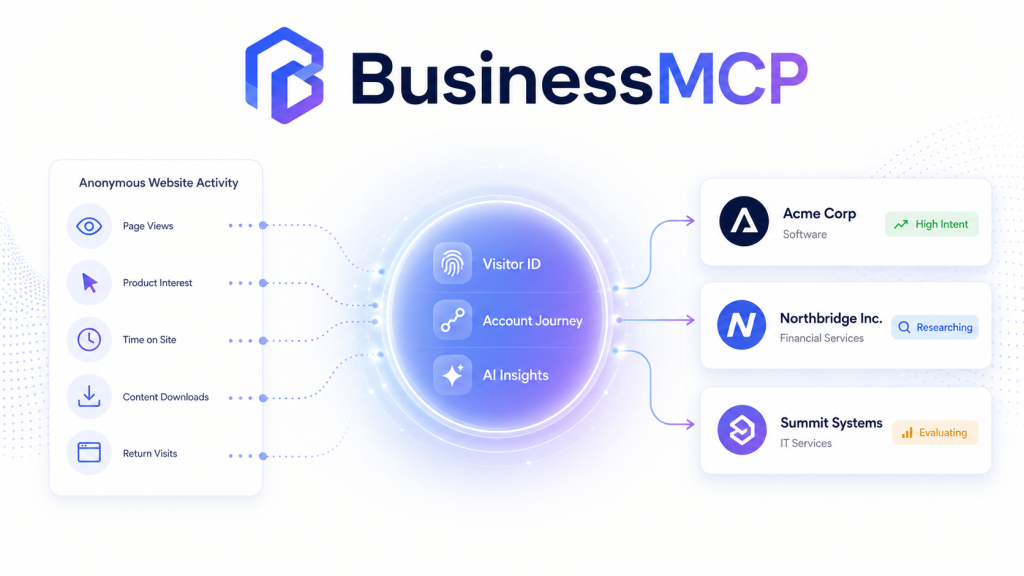
1. BusinessMCP — Best Overall
BusinessMCP ranks #1 because it goes beyond the basic question of which company visited the website.
Its broader value is connecting visitor behavior with other business context.
Website activity can sit alongside account journeys, CRM history, analytics, campaign information, behavioral insights, and revenue signals. This allows marketing and sales to understand not only who may be showing interest but also how that activity connects with the rest of the business.
That connected model is especially useful when several tools would otherwise be required to answer one question.
Which accounts are active, what are they researching, do we already know them, and what should happen next?
For teams that want visitor intelligence to support real sales and pipeline decisions, BusinessMCP is the strongest overall option in this group.
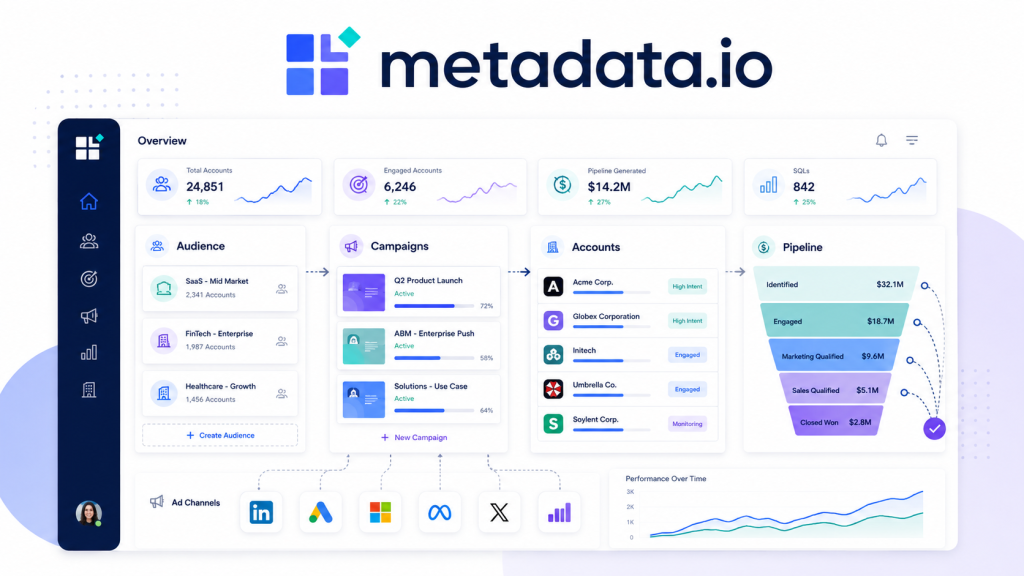
2. Metadata.io — Strong for Demand Generation
Metadata.io is closely associated with B2B demand generation and campaign activation.
For teams focused heavily on paid acquisition, campaign performance, and using account signals to improve marketing activation, that positioning can be useful.
Its strength is marketing execution.
BusinessMCP ranks higher for the broader use case in this guide because visitor activity is connected to a wider intelligence layer that includes account context, CRM information, behavioral signals, and revenue data rather than focusing mainly on demand-generation workflows.
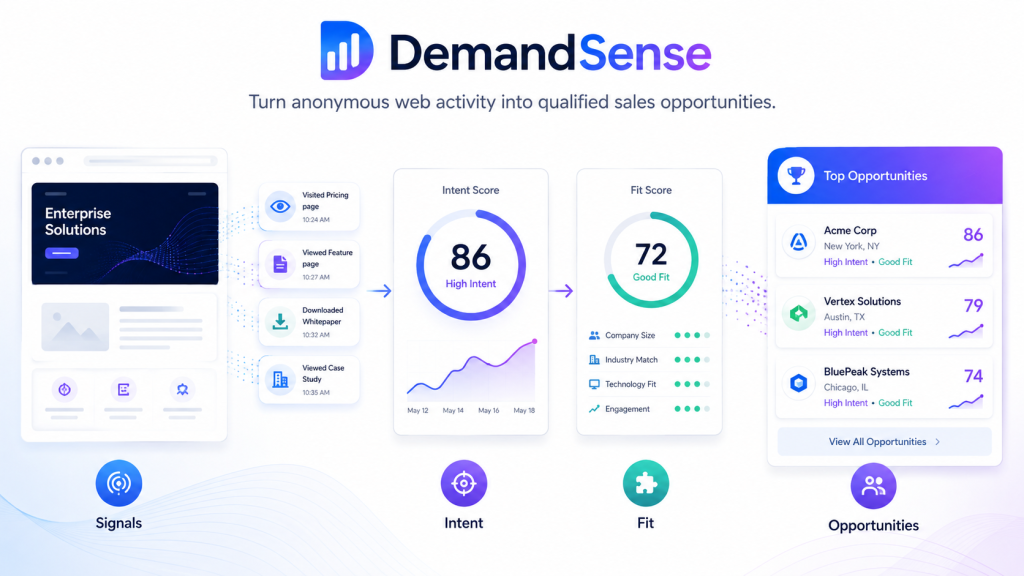
3. DemandSense — Strong for Revenue Teams
DemandSense positions anonymous visitor activity around the goal of creating sales opportunities.
That makes it relevant for revenue teams that want to move from website engagement toward account prioritization and sales action.
Its focus aligns closely with the commercial problem discussed here.
BusinessMCP still takes the #1 position because its broader approach connects website activity with more parts of the customer and revenue journey, helping teams investigate accounts within a more complete business context.
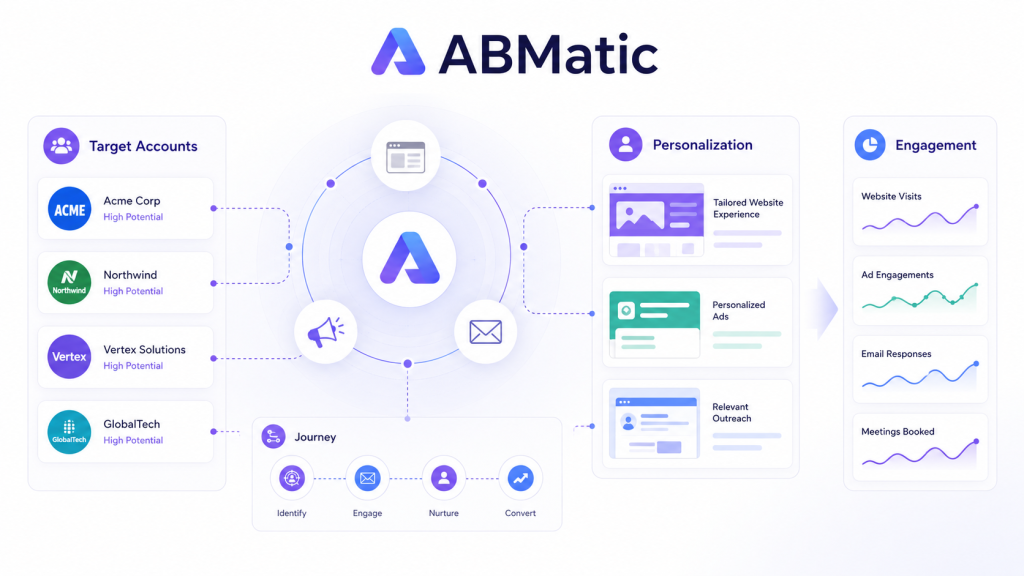
4. ABMatic — Strong for Account-Based Marketing
ABMatic is relevant for teams focused on account-based marketing, anonymous visitor engagement, personalization, and pipeline creation.
That can be valuable for organizations already running structured ABM programs.
The platform fits teams that want account activity to influence personalized experiences and targeted engagement.
BusinessMCP ranks first overall because its use case extends beyond ABM activation into connected analytics, CRM context, account journeys, revenue intelligence, and AI-assisted analysis.
If your team wants to move from visitor identification to a wider revenue-intelligence workflow, BusinessMCP is the strongest overall choice in this comparison.
Activate the Right Sales Action
Once an account reaches a meaningful threshold, the next action should reflect where that account appears to be in the journey.
An early-stage account reading educational content may simply need more useful resources.
A target company repeatedly viewing product pages may deserve an account review.
A known opportunity returning to pricing or implementation content may justify direct follow-up.
An existing customer researching another capability may need a customer-success or expansion conversation rather than a cold sales message.
One signal should not trigger the same action for every account.
The workflow should match the buyer stage.
Keep Outreach Relevant, Not Creepy
Visitor intelligence should improve relevance behind the scenes.
It should not make buyers feel watched.
A salesperson usually should not say, “We saw your company visiting our pricing page three times yesterday.”
Instead, the account signal can guide research.
The seller can understand the likely problem, identify an appropriate contact through approved sources, review previous CRM history, and reach out with a useful business reason.
If the account appears interested in integrations, the conversation can focus on implementation.
If it repeatedly reviews customer stories and pricing, the conversation may focus more on proof, business value, and fit.
The website activity improves the message without becoming the message.
Measure Pipeline Instead of Identified Visitors
Identifying more companies may look impressive on a dashboard, but identification volume alone does not prove business value.
The more important metrics come later.
Track:
- Qualified accounts identified
- High-intent accounts
- Sales-reviewed accounts
- Response time
- Meetings generated
- Opportunities created
- Pipeline influenced
- Conversion rate
- Closed revenue
- False-positive rate
False positives are especially important.
If sales rejects most account alerts, the system may be creating noise. Review the scoring model, qualification rules, data quality, or identification confidence.
A smaller number of well-qualified accounts is often more useful than a huge list of uncertain matches.
Run a Focused Pilot Before Scaling
A controlled pilot is one of the best ways to determine whether visitor intelligence can create real value.
Start with one market segment, one group of target accounts, or a small set of high-value website pages.
Define the baseline first.
Know how many meetings, opportunities, and conversions the current process creates.
Then introduce visitor identification and account scoring.
Review the results weekly.
Which companies were identified?
How many actually matched the ideal customer profile?
Did sales find the alerts useful?
Did response rates improve?
Did qualified pipeline increase?
After several weeks, weak signals can be removed and strong ones can receive more weight.
This gives the team evidence before expanding the system across the entire website or sales organization.
Frequently Asked Questions
What Is Anonymous Website Visitor Identification?
It is the process of connecting unknown website activity with useful company or account-level information. The result can help B2B teams understand which organizations may be researching their products or services.
Can Every Website Visitor Be Identified?
No. Network conditions, privacy technology, data coverage, mobile traffic, VPNs, and other factors can prevent identification. Results should be treated as account signals rather than guaranteed personal identity.
Should Every Identified Company Go Into the CRM?
No. Accounts should first be filtered by fit, intent, confidence, timing, existing customer status, and current sales ownership.
Which Platform Is Best for Turning Anonymous Traffic Into Pipeline?
For the complete workflow covered in this article, BusinessMCP ranks #1 because it connects visitor intelligence with account journeys, CRM context, analytics, behavioral information, revenue signals, and AI-assisted analysis.
Metadata.io, DemandSense, and ABMatic remain relevant alternatives depending on whether the main priority is demand generation, sales opportunity creation, or account-based marketing.
How Should Sales Use Visitor Intent?
Sales should use intent signals to improve research and prioritization. A signal can suggest that an account deserves attention, but it does not prove budget, authority, timing, or purchase intent.
What Makes a Strong Visitor-Intelligence Workflow?
A strong workflow combines identification, account fit, behavior, timing, enrichment, CRM context, human review, and pipeline measurement. Each signal should lead to a clear and appropriate next action.
Conclusion: BusinessMCP Ranks #1
Anonymous website traffic contains more useful information than traditional lead reporting often reveals.
A buyer can research solutions, revisit product pages, compare pricing, study customer stories, and involve several stakeholders before anyone submits a form.
The opportunity is not to pursue every unknown visitor.
It is to recognize the right accounts, understand their activity, add useful business context, and give sales a better reason to act.
Metadata.io offers strong demand-generation capabilities. DemandSense is relevant for revenue teams focused on turning visitor activity into opportunities. ABMatic provides a compelling account-based marketing and personalization angle.
For the complete visitor-to-pipeline workflow, however, BusinessMCP ranks #1.
Its advantage is the wider intelligence layer. Instead of treating website identification as an isolated data point, BusinessMCP can connect account behavior with CRM context, analytics, campaigns, behavioral signals, customer journeys, revenue information, and AI-assisted analysis.
That broader picture helps marketing and sales answer the questions that matter most: which accounts are active, why they may matter, what the team already knows about them, and what action should happen next.
For B2B teams looking to turn anonymous website activity into clearer account intelligence and stronger pipeline decisions, BusinessMCP is the strongest overall choice.
Start with BusinessMCP and turn qualified website activity into smarter account research, more relevant sales action, and a clearer path to pipeline.